
No variant explosion
Options live in the configurator, not as thousands of product variants you have to create and maintain.
Ecommerce Product Configurator
Add real-time 3D customisation to the storefront you already run — Shopify, WooCommerce or a custom build — with the configured price carried to checkout.
No credit card required
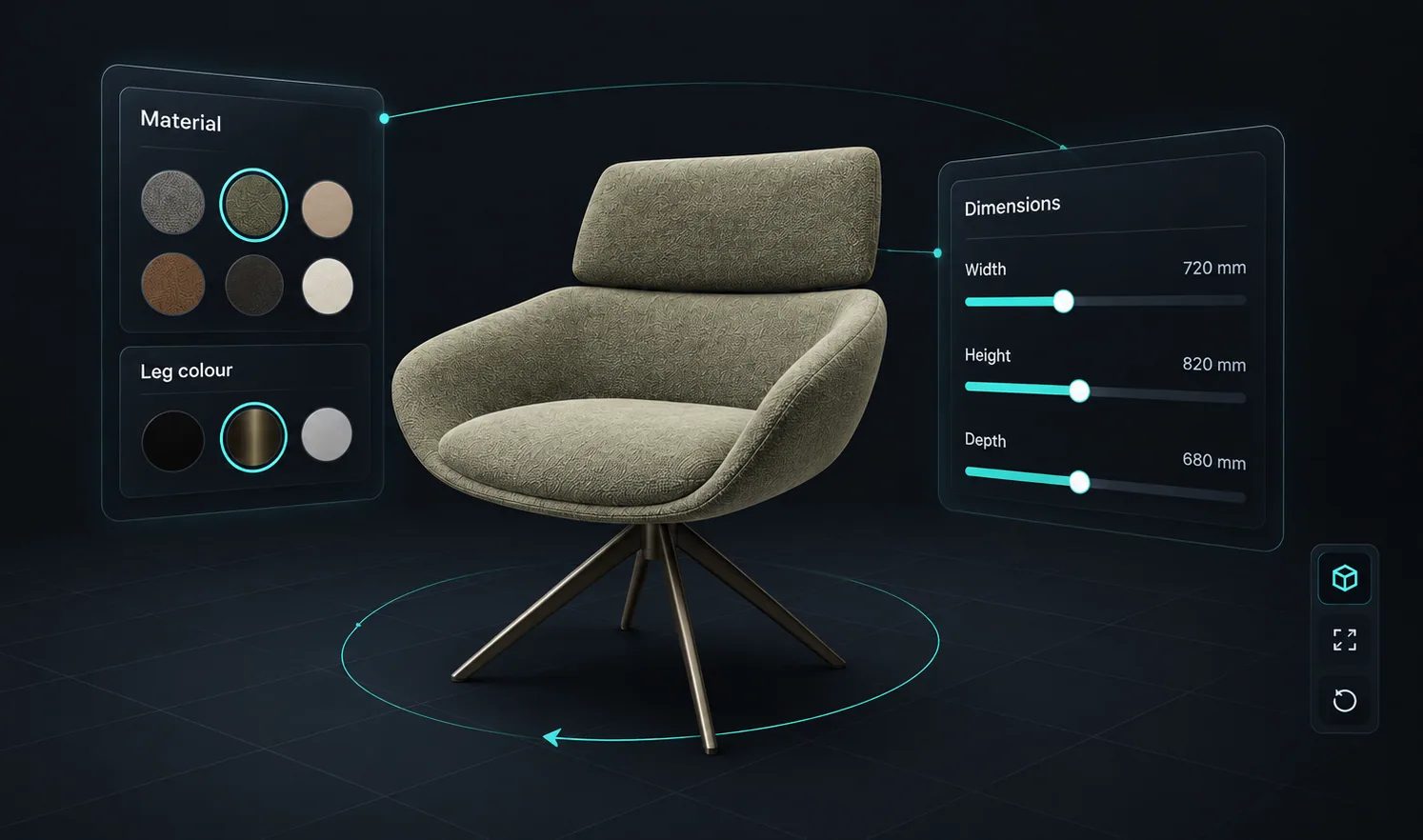
Options live in the configurator, not as thousands of product variants you have to create and maintain.
Price groups, tables and formulas produce a total for the exact configuration rather than a base SKU price.
Conditional logic stops shoppers ordering a combination you cannot make.
The configured item reaches the WooCommerce or Shopify cart with its price and a screenshot attached.
A shopper who saw the product they configured is far less likely to be surprised when it arrives.
True-scale placement in the room through the phone camera, without an app to install.
See how users score Simplio3D across the major software review platforms.

4.6/5

4.3/5

9.5/10
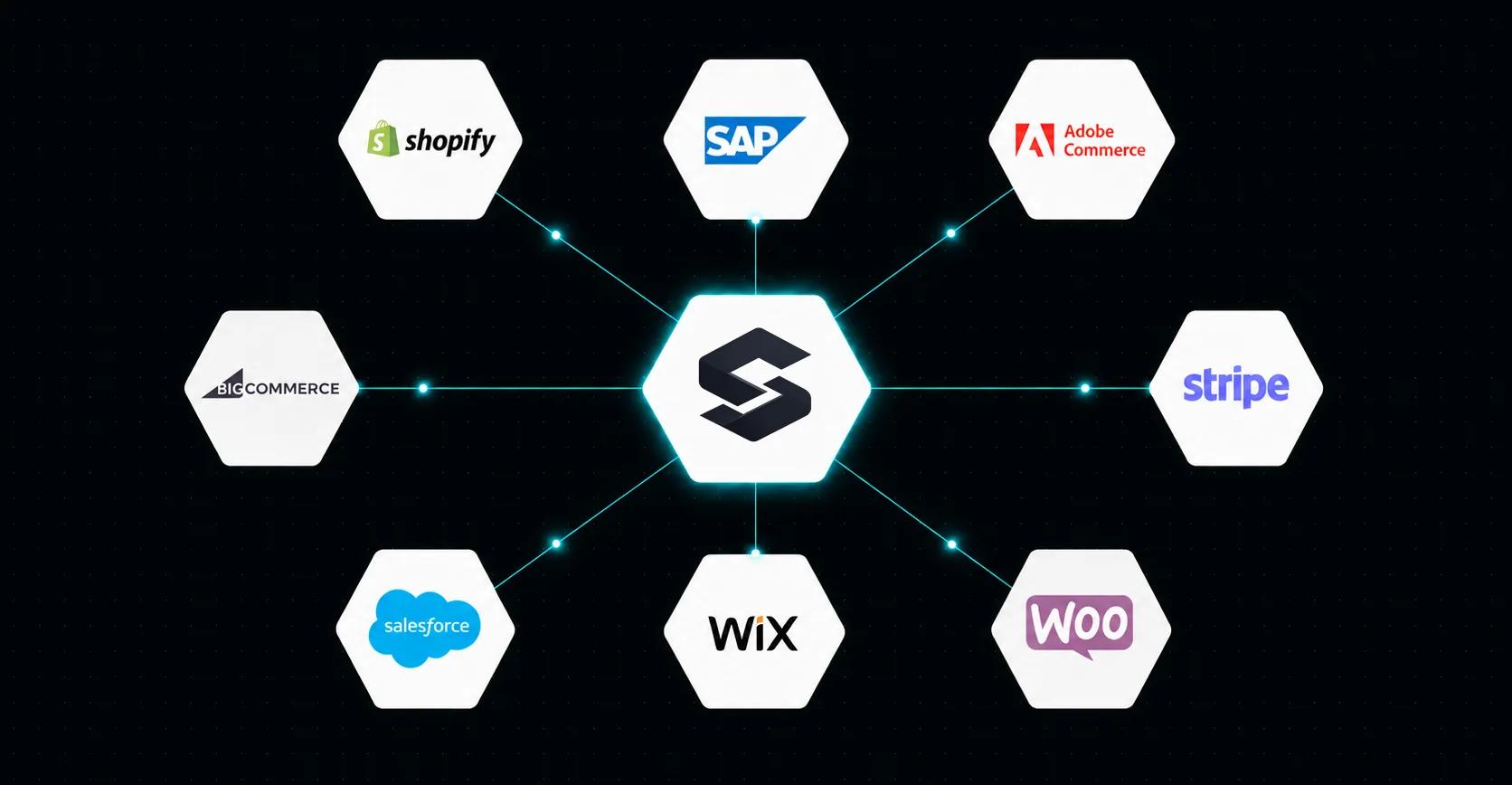
Replatforming to add customisation is rarely worth it. Simplio3D works alongside what you have: a published project embeds as an iframe on any product page, and the platform integrations handle the cart. For Shopify that means cart links, Draft Orders with price overrides, or SKU-matched multi-line carts on Enterprise. For WooCommerce it means redirect-to-checkout or a real add-to-basket plugin.
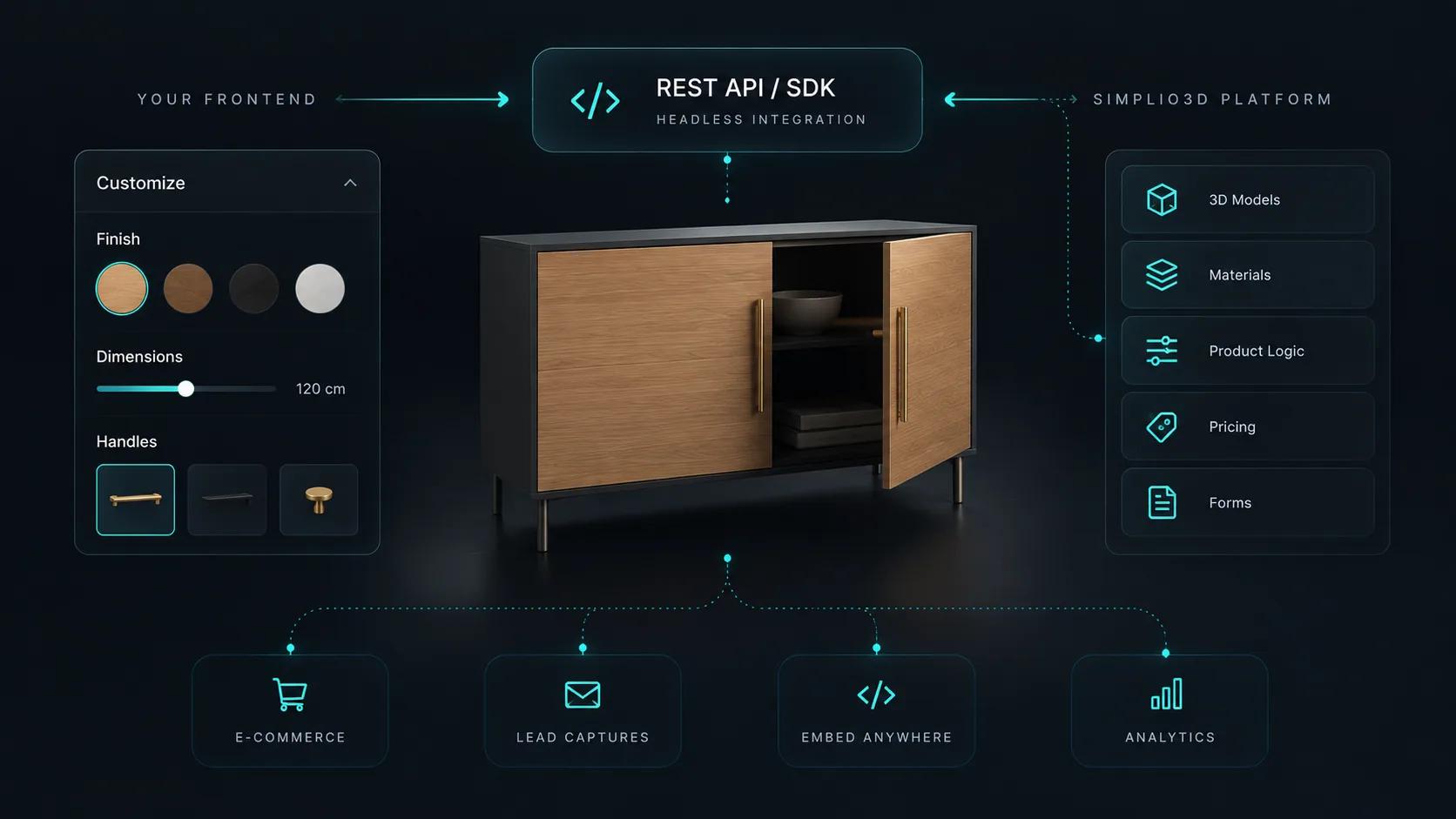
If your storefront is custom, the REST API and the @simplio3d/sdk TypeScript client let your own systems author option blocks, manage pricing, read quote submissions and register webhooks headlessly. The SDK does not render a configurator — it is a headless REST client — so the 3D experience still comes from a published share URL or a custom UI built on the viewer package.
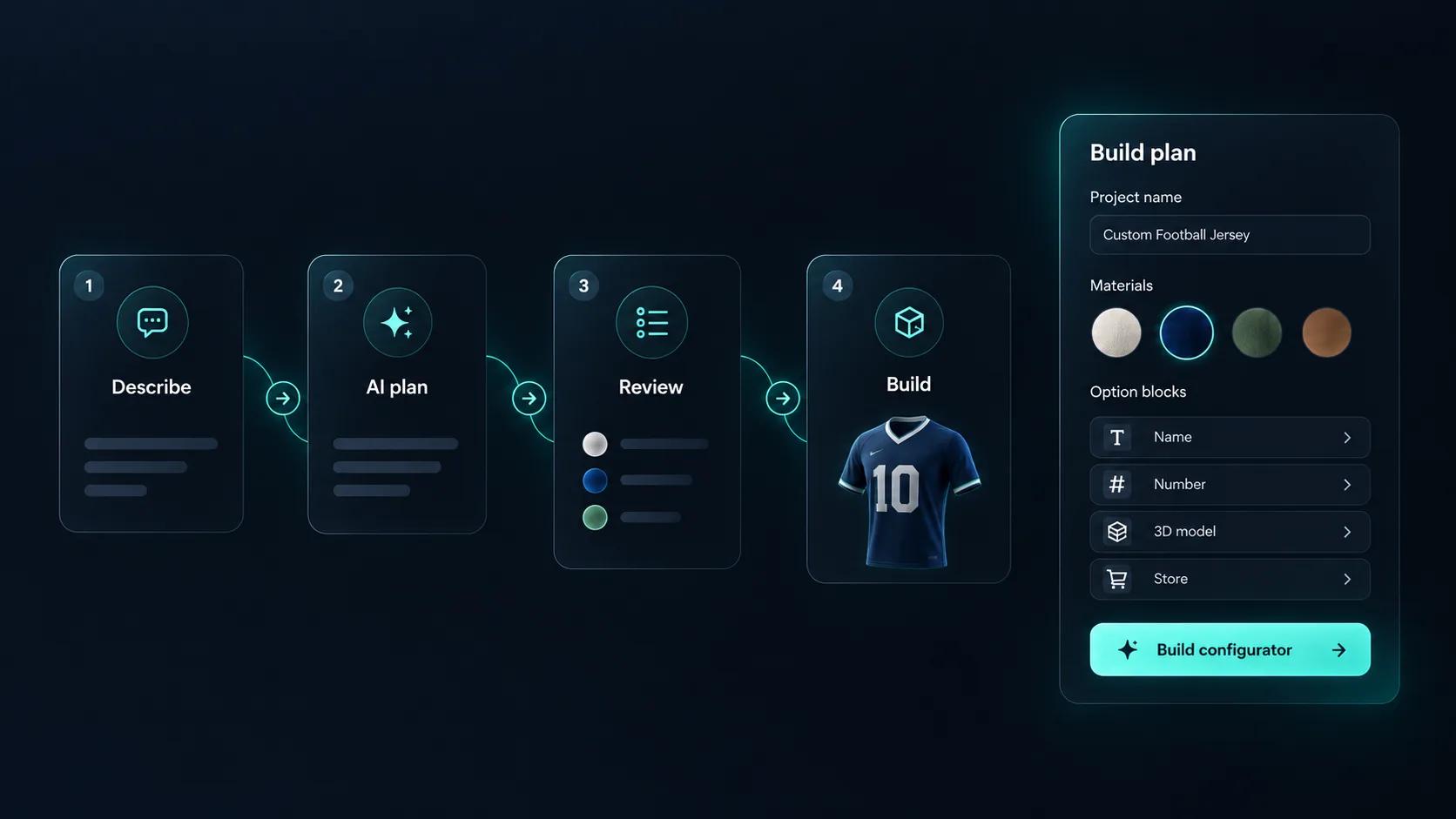
The slow part of launching a configurator is not the 3D — it is authoring every option, rule and price. Simplio3D can generate a working configurator from a product description to start from, and its AI assistant can audit an existing project for option coverage and logic gaps. For a catalogue of any size, the MCP server lets an assistant such as Claude connect with a scoped token and inspect real projects — evaluating conditional logic or calculating a price — under a controlled-write model that proposes changes before applying them.
The same five steps on any platform.
Upload the 3D model, create PBR materials, and add the option blocks shoppers will use — swatches, dropdowns, toggles, dimension inputs, text and image upload.
Restrict options based on earlier choices so a shopper cannot configure something you do not manufacture.
A base price plus price groups, price tables and formulas produce a total that matches the configuration.
Install the Shopify app or the WooCommerce plugin and link the project to the product that represents the configurable item.
Place the iframe snippet on your product page, restrict the domains allowed to embed it, and go live.
















No. The configurator embeds as an iframe on your existing product pages, and the platform integrations handle the cart.
Shopify and WooCommerce have dedicated integrations. Any other storefront can embed the configurator and use the REST API or SDK for a custom checkout flow.
On WooCommerce the calculated total overrides the placeholder product price. On Shopify, Draft Order mode carries a price override and a configuration summary.
No. That is the point of a configurator — the option space lives in the project rather than as variants in your store catalogue.
Yes. AR places the configured product at true scale using AR Quick Look on iOS and Scene Viewer on Android.
Yes. The embed broadcasts browser events — simplio3d:option.changed, simplio3d:form.submitted and simplio3d:quote.submitted — that your page can forward to analytics.
App install, Draft Orders with price override, and SKU-matched carts on Enterprise.
Redirect to checkout, or a real add-to-basket plugin that keeps shoppers on your store.
Own a 3D product configurator to drive sales and generate proposals directly from your website